
Fruit Processing Equipment: Planning Juice, Pulp and Preserves
MUSA BOD GROUP · PRACTICAL BUSINESS GUIDE
A fruit-processing project should begin with the product and the buyer. Juice, pulp, jam and dried fruit have different process requirements, packaging and quality controls. Choosing equipment before establishing the product can result in expensive machinery that does not solve the business’s actual production problem.
Choose a product and test the market
Discuss flavour, pack format, portion size and purchase frequency with prospective buyers. Establish whether the product will be sold immediately, refrigerated or through a longer distribution chain. These decisions influence the process. Do not assume a preservation method or shelf life from a competitor’s label. A competent food technologist should validate the process and product before commercial claims are made.
Map the raw material and the process
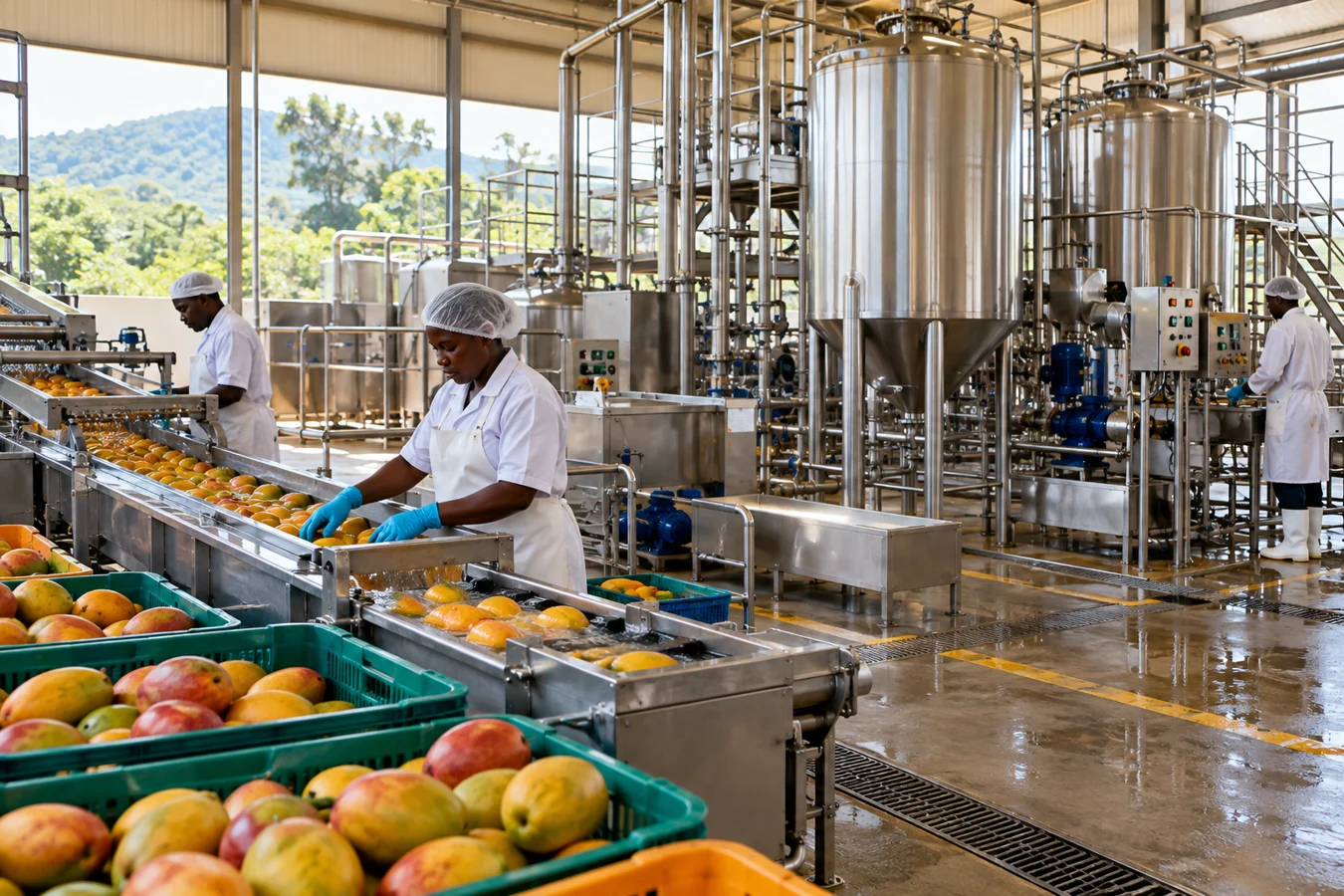
Record fruit varieties, ripeness, seasonal supply and acceptable quality. Sorting and preparation losses can materially change the amount of finished product. Write a process flow covering receiving, washing, preparation, extraction or pulping, the validated treatment, filling and storage. The sequence differs by product. Separate raw-material movement from clean product and packaging areas wherever the facility design requires it.
Match machines to the product characteristics
A pump or filler suitable for thin juice may not handle thick pulp or particles. Ask suppliers to test the actual product or a properly representative material. Confirm food-contact materials, seals, cleaning access and compatibility with the proposed cleaning procedure. Filling performance should be assessed in the selected container, with product consistency and temperature assumptions clearly stated.
Plan hygiene and quality controls
Suitable water, drainage, handwashing, cleaning and pest management are part of the production system. Involve food-safety specialists in the layout and operating procedures. Equipment alone does not establish a hygienic process. Agree testing, batch identification, storage monitoring and procedures for holding product that does not meet specification. Confirm current Uganda product standards and certification requirements with UNBS.
Include the less visible equipment
A proposal may omit crates, preparation tables, tanks, scales, coding equipment, cleaning tools or cold storage. These omissions can delay commissioning. Request a complete equipment schedule showing what each item does and how it connects to the next stage. Test the line at a realistic production rate, including packaging and cleaning, rather than assessing only the main pulper or extractor.
A practical example
Illustrative planning example: a pulper advertised at a high fruit-input rate may supply a filler faster than it can package the product. Size the complete line around acceptable packed output and the validated product process.
Prepare your enquiry
- Product specification and intended distribution
- Seasonal fruit supply and preparation losses
- Validated process and shelf-life assessment
- Container trials, filling accuracy and cleaning
- Water, drainage, testing and storage needs
How Musa Bod Group can help
Bring your project brief to Musa Bod Group for machinery sourcing discussions, business advisory or coordination with relevant technical partners. We agree the scope, responsibilities and fees before engagement. Equipment availability, performance, delivery, warranty and after-sales arrangements are confirmed for the specific supplier proposal. This guide supports planning; specialist designs, safety procedures, food-process validation and legal or financial decisions require the appropriate qualified professionals.
Request a consultation · Explore machinery support
Continue reading
- Packaging Machines: Choosing Filling and Sealing Equipment
- Factory Site Inspections: What to Check Before Installation
Further reading
UIRI: fruits and vegetables processing. External references provide background; historical manuals do not establish current Uganda regulatory requirements. Where an international safety reference is used, it is not presented as Ugandan law.