
Factory Layout Planning: Design the Flow Before Buying Equipment
MUSA BOD GROUP · PRACTICAL BUSINESS GUIDE
A factory layout is a working arrangement for people, materials, utilities, maintenance and finished products. It is more than a drawing showing where machines fit. A useful layout makes the production sequence clear and tests whether the building can support that sequence safely and efficiently.
Begin with the process and the volumes
List receiving, inspection, storage, processing, packing and dispatch. Mark the expected quantity and movement frequency at each stage. Identify material that must be held, rejected or reworked. The drawing should show where work waits as well as where it happens. This reveals whether a large machine is likely to create congestion or whether a small buffer can prevent interruptions.
Separate incompatible activities
Consider raw and finished products, dusty and clean operations, vehicle and pedestrian routes, and maintenance or waste handling. Food facilities require hazard-specific hygiene planning. Other factories have their own material, fire and process risks. Engage the relevant professionals to establish suitable separation and controls. Painting lines on the floor is not a substitute for the physical measures a risk assessment may require.
Allow access around equipment
Ask suppliers for service clearances, door opening space, screen-removal distances and lifting requirements. A machine may fit during installation but become impossible to maintain without dismantling neighbouring equipment. Mark control positions, emergency access and isolation points on the plan. Consider how replacement parts or an entire machine could be removed later without shutting down unrelated areas unnecessarily.
Coordinate utilities before finalising positions
Locate power distribution, water, drainage, compressed air, ventilation and other required services with competent specialists. Confirm actual connection points, equipment loads and installation requirements. A convenient wall position may be unsuitable for drainage or electrical access. Keep the layout, equipment schedule and utility design consistent; changes to one document should trigger a review of the others.
Test the layout with a realistic day
Walk through a receiving delivery, normal production, packing, cleaning, a maintenance task and finished-goods dispatch. Check what happens during peak stock levels or a machine stoppage. Include staff facilities and room for future changes where feasible. Issue a controlled drawing and a list of unresolved decisions before procurement so suppliers are not working from conflicting versions.
A practical example
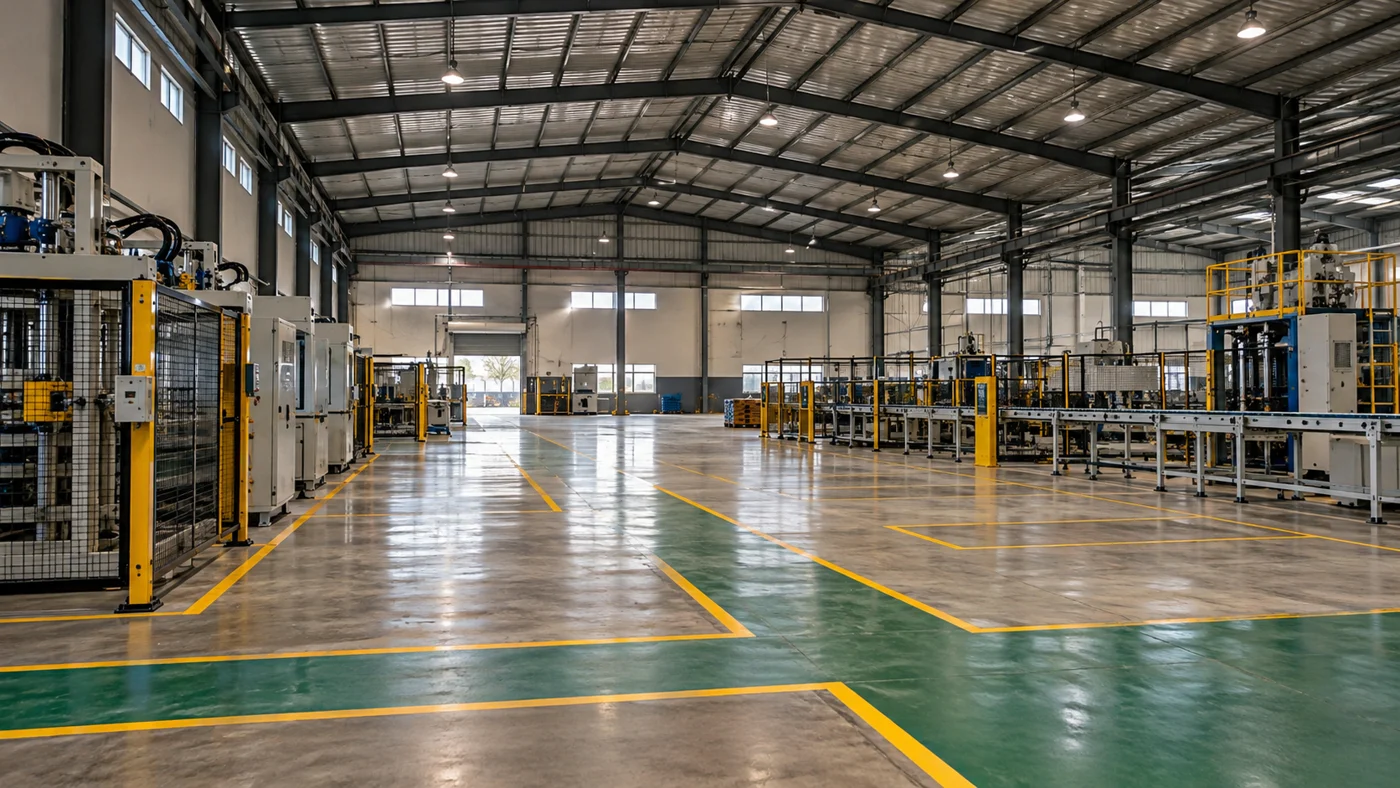
Illustrative planning example: placing packing beside the entrance may seem convenient until incoming raw materials cross finished-product movement all day. A simple walk-through using marked routes can reveal the problem before expensive installation work begins.
Prepare your enquiry
- Process flow with quantities and waiting areas
- Safe separation and movement routes
- Maintenance and replacement access
- Coordinated utility and drainage plan
- Reviewed drawing and recorded open decisions
How Musa Bod Group can help
Bring your project brief to Musa Bod Group for machinery sourcing discussions, business advisory or coordination with relevant technical partners. We agree the scope, responsibilities and fees before engagement. Equipment availability, performance, delivery, warranty and after-sales arrangements are confirmed for the specific supplier proposal. This guide supports planning; specialist designs, safety procedures, food-process validation and legal or financial decisions require the appropriate qualified professionals.
Request a consultation · Explore machinery support
Continue reading
- Factory Site Inspections: What to Check Before Installation
- How to Compare Machinery Quotations Without Missing Key Costs
Further reading
FAO: good hygiene practices for establishments. External references provide background; historical manuals do not establish current Uganda regulatory requirements. Where an international safety reference is used, it is not presented as Ugandan law.