Machinery Power Requirements: Questions for Your Supplier and Electrician
MUSA BOD GROUP · PRACTICAL BUSINESS GUIDE
A machine’s electrical requirements should be agreed before purchase. A motor rating alone does not establish whether an existing supply can start and run the equipment safely. The supplier and a qualified electrician should review the complete installation, including associated machines, controls and protective arrangements.
Collect the complete electrical specification
Request voltage, phase, frequency, rated current, motor information, control requirements and the manufacturer’s installation instructions. Confirm which auxiliary equipment is included. Conveyors, heaters, compressors and dust systems may add loads not obvious in the main machine advertisement. Ask for a schedule of the complete line, with the assumptions behind the stated power demand.
Discuss starting and simultaneous operation
A system may behave differently when motors start than when they are running steadily. Tell the electrician which machines start together and which must run continuously. The professional should assess the supply, starting method, protective devices and voltage conditions using appropriate information. Do not size cables, generators or breakers from an online rule of thumb; incorrect selections can create safety and equipment risks.
Check the actual site supply
Existing sockets or a nearby power line do not prove adequate supply. Obtain documented information about the connection and have the installation assessed. Where backup generation is considered, define the required operating mode and essential loads. The generator supplier and electrical specialist should coordinate the design, changeover and safe installation rather than treating the generator as an isolated purchase.
Plan safe controls and maintenance access
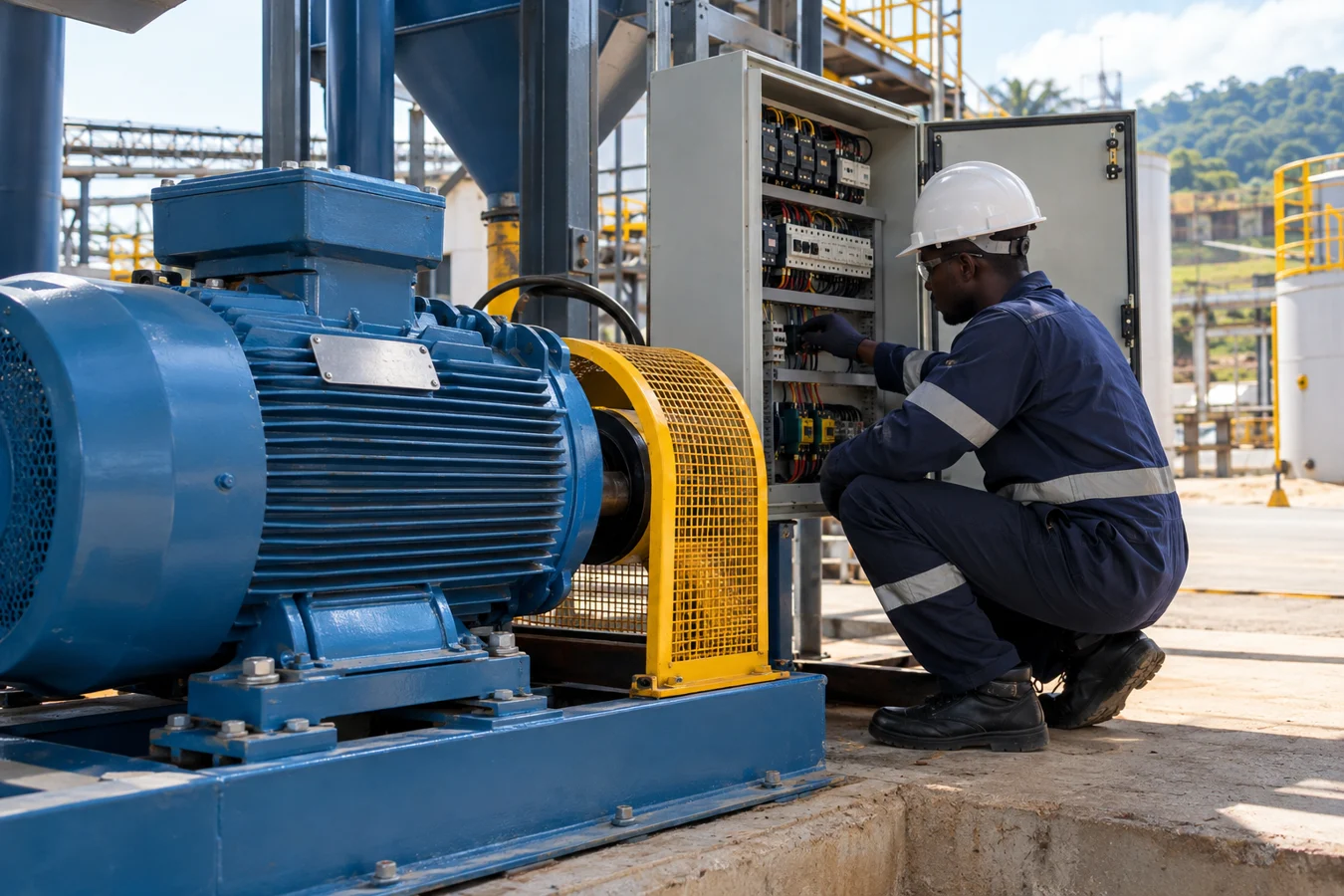
Agree the location of isolators, control panels and emergency arrangements. Controls must be appropriate for dust, moisture and the operating environment. Ask how equipment is safely isolated and verified before servicing, including stored energy beyond electricity. Operator instructions should distinguish normal stopping from maintenance isolation. An emergency-stop button is not a substitute for an energy-isolation procedure.
Include testing and handover
The electrical scope should identify installation, inspection, testing, documentation and staff familiarisation. Record who approves readiness before energising the equipment. Keep drawings and equipment labels consistent with the installed system. If machinery is changed later, review the electrical design again rather than connecting extra loads because unused physical space remains in the panel.
A practical example
Illustrative planning example: a mill’s main motor may fit within an owner’s assumed power allowance, while its conveyor, lighting and extraction loads push the complete line beyond that assumption. A complete load schedule exposes the issue before installation.
Prepare your enquiry
- Full line electrical schedule and manuals
- Site supply assessment by a qualified professional
- Starting, backup and simultaneous-load review
- Isolation, controls and environment requirements
- Inspection, testing and handover documents
How Musa Bod Group can help
Bring your project brief to Musa Bod Group for machinery sourcing discussions, business advisory or coordination with relevant technical partners. We agree the scope, responsibilities and fees before engagement. Equipment availability, performance, delivery, warranty and after-sales arrangements are confirmed for the specific supplier proposal. This guide supports planning; specialist designs, safety procedures, food-process validation and legal or financial decisions require the appropriate qualified professionals.
Request a consultation · Explore machinery support
Continue reading
- Preventive Maintenance for Small Processing Businesses
- Factory Commissioning: Testing Equipment Before Final Handover
Further reading
OSHA: machine guarding and hazardous-energy controls, US reference. External references provide background; historical manuals do not establish current Uganda regulatory requirements. Where an international safety reference is used, it is not presented as Ugandan law.