
Oil Press Machines: Planning a Small Processing Business
MUSA BOD GROUP · PRACTICAL BUSINESS GUIDE
An oil press is one part of an oil-processing business. The suitability of the seed, preparation process, product handling and intended market all affect the equipment choice. Before requesting a quotation, define the crop and the finished product you plan to offer, and obtain specialist input on food safety and quality.
Start with a consistent raw material
Identify the seed or nut, expected availability, quality and storage conditions. The same press may perform differently with different materials or preparation. Ask whether cleaning, shelling, size reduction or controlled conditioning is required. Do not treat the oil content reported for a crop as the amount your machine will recover; actual recoverable output must be demonstrated under defined conditions.
Separate pressing from finishing
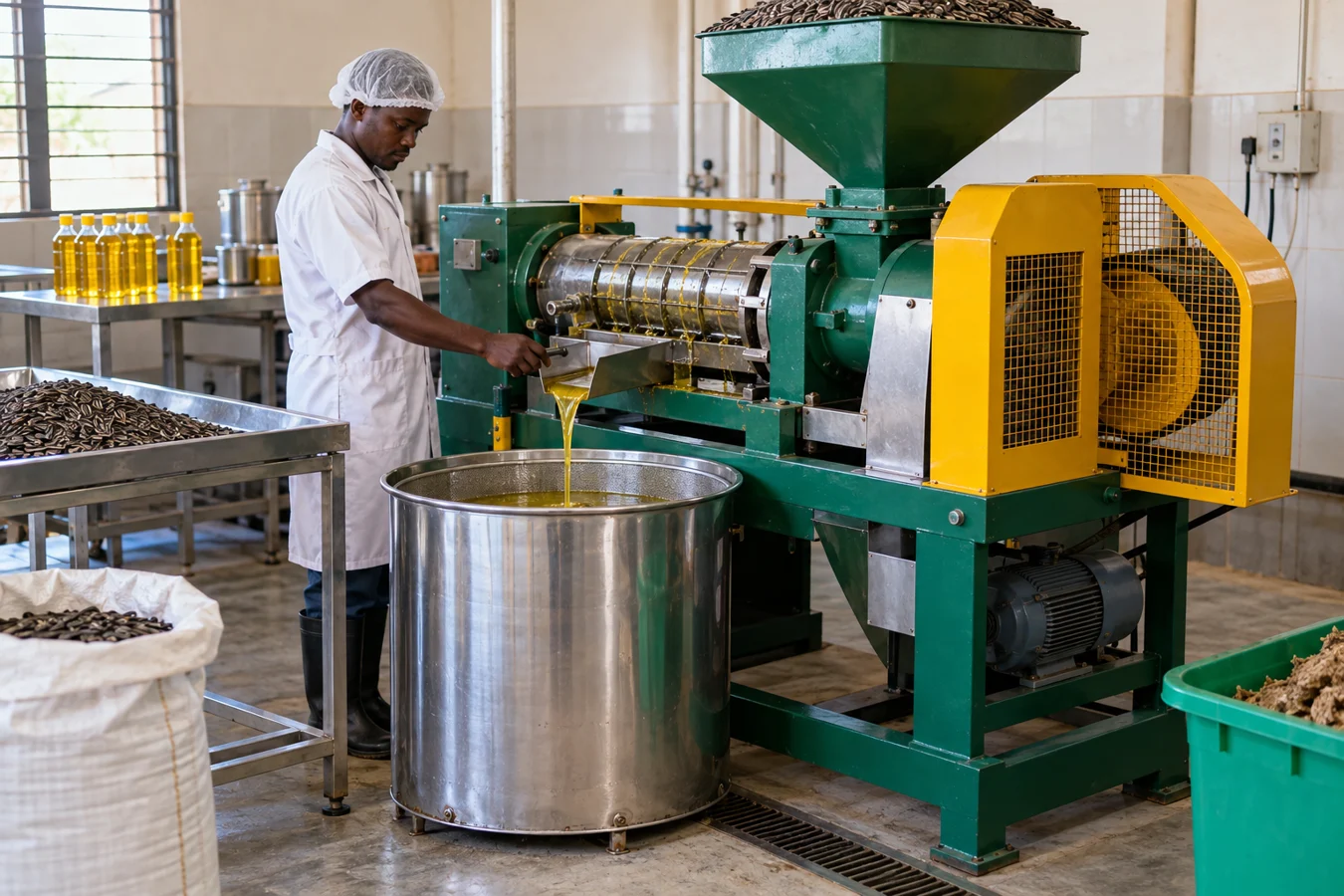
Pressing produces an oil stream and a solid by-product, but the oil may need settling, filtration or other suitable treatment before it meets the intended specification. Ask a food-processing specialist to define the required process and testing. A label such as “cold pressed” should have a defensible process basis; it should not be added because the supplier uses the phrase in a brochure.
Test quality and yield together
Arrange a representative trial and record raw material weight, preparation, operating settings, acceptable oil and by-product quantities. Agree how quality is assessed. Increasing output is not useful if the product fails the buyer’s requirements. Collect samples at a suitable point in the process and use qualified testing where required. Treat any suggested extraction rate as conditional on the material and process used in the demonstration.
Plan by-products, cleaning and storage
Identify a legitimate outlet or disposal method for the press cake and other residues. Do not assume every by-product is suitable for animal feed without the relevant assessment. Consider cleaning access, food-contact materials, closed containers, pest control and separation between raw materials and finished products. Packaging and storage should protect the product through its intended distribution route.
Build a realistic equipment enquiry
Include the seed type, target input rate, intended oil specification, power availability and facility layout. Request separate prices for preparation equipment, press, filtration, tanks, filling, installation and training. Ask about the parts that wear, replacement frequency assumptions and local technical support. Confirm the current product standards and certification pathway with UNBS before planning a commercial launch.
A practical example
Illustrative planning example: purchasing only the press can leave a business unable to fill a consistent packaged product. Compare proposals for the complete agreed process, including preparation, product finishing, containers and quality checks.
Prepare your enquiry
- Raw material type, supply and preparation
- Representative extraction and quality trial
- Filtration, tanks and packaging scope
- Food-contact materials and cleaning access
- By-product handling and standards review
How Musa Bod Group can help
Bring your project brief to Musa Bod Group for machinery sourcing discussions, business advisory or coordination with relevant technical partners. We agree the scope, responsibilities and fees before engagement. Equipment availability, performance, delivery, warranty and after-sales arrangements are confirmed for the specific supplier proposal. This guide supports planning; specialist designs, safety procedures, food-process validation and legal or financial decisions require the appropriate qualified professionals.
Request a consultation · Explore machinery support
Continue reading
- Animal Feed Machinery: From Mixing Requirements to a Working Line
- Concrete Mixers: Capacity, Site Logistics and Maintenance
Further reading
UNIDO: small-scale oil extraction. External references provide background; historical manuals do not establish current Uganda regulatory requirements. Where an international safety reference is used, it is not presented as Ugandan law.