
Grain Cleaning Machines: What to Check Before Buying
MUSA BOD GROUP · PRACTICAL BUSINESS GUIDE
Grain cleaning is an important link between receiving a crop and processing or storage. Its purpose is to remove specified unwanted material, not to transform an unsuitable raw material into a guaranteed safe product. A useful equipment brief identifies the grain, the contaminants of concern and the quality the next stage requires.
Describe the material you actually receive
Take representative samples from several suppliers or seasons. Note dust, chaff, stones, damaged kernels and other foreign material without assuming that one cleaner can remove everything. The proportions and physical characteristics matter. A machine demonstrated on clean grain may look productive while providing little evidence of performance on the loads your business receives.
Match separation methods to the problem
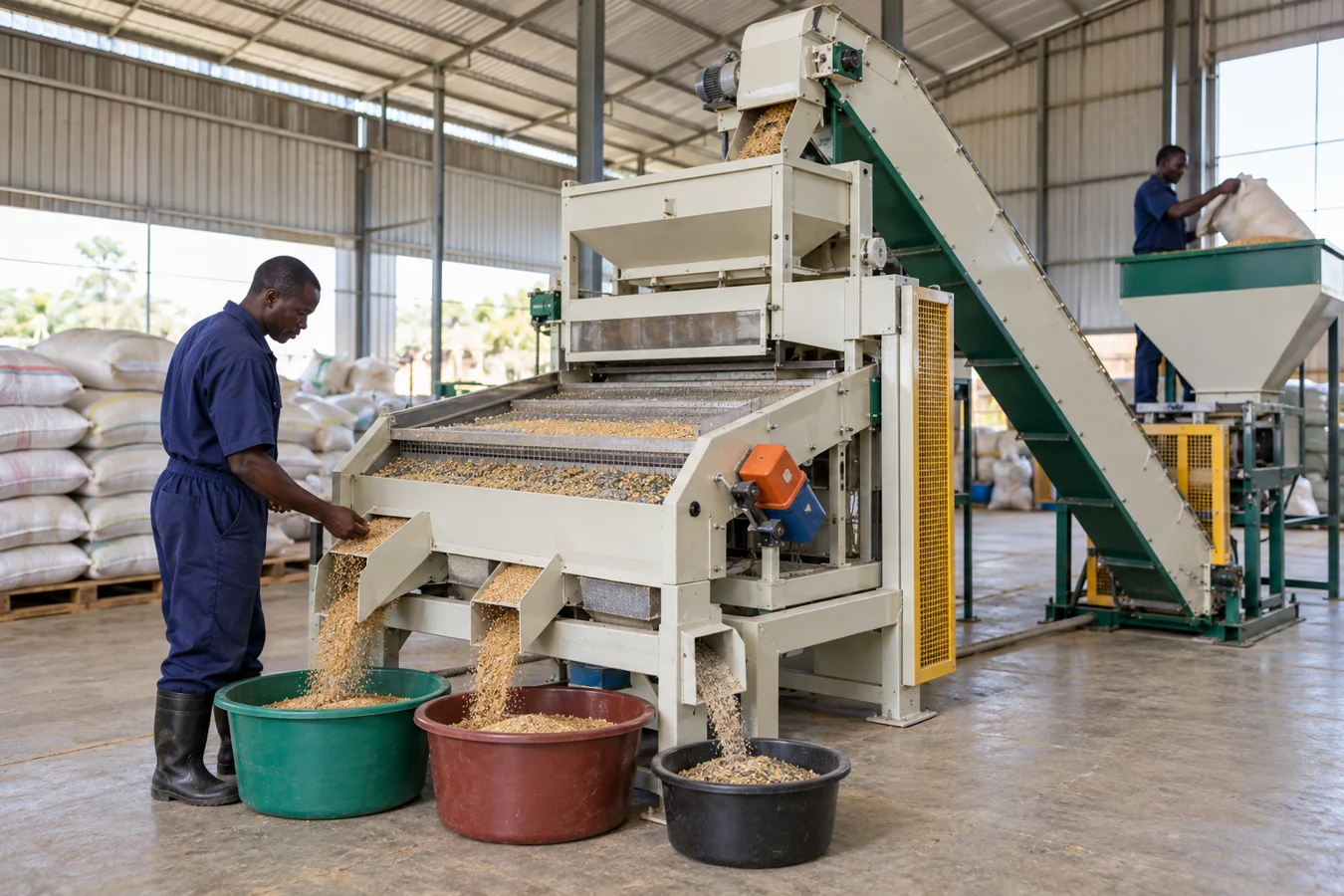
Screens separate material by dimensions, airflow can separate lighter fractions, and other specialised systems address different characteristics. Ask the supplier to explain what each stage is intended to remove and what remains outside its capability. Do not assume a basic screen cleaner replaces a destoner, a sorting system, laboratory testing or a food-safety control programme. The appropriate sequence depends on the crop and the intended end product.
Measure losses as well as cleanliness
A cleaner that removes contaminants but also sends substantial good grain into the reject stream can be costly to operate. During a demonstration, collect and weigh the input, cleaned product and rejected material. Examine each stream against an agreed method. Ask how settings change when grain size or condition varies, and whether staff can adjust screens and airflow safely without improvised modifications.
Integrate feeding and dust control
Uneven feeding can affect separation and cause unstable output. Confirm the hopper, feeder, discharge height and downstream equipment interface. Discuss dust collection, housekeeping and safe electrical arrangements with competent specialists. Do not rely on an open doorway as the dust-control design. Include space for removing screens, inspecting wear points and collecting rejects without blocking operator routes.
Define the acceptance and handover documents
A complete proposal should state crop assumptions, required cleanliness, usable output capacity and expected product loss under the test conditions. Request a screen list, cleaning instructions, spare-part references and a demonstration of safe isolation for maintenance. Confirm whether conveyors, platforms, dust equipment and installation are included or separately priced. Clear boundaries make quotations easier to compare and reduce disputes after delivery.
A practical example
Illustrative planning example: a cleaner with a higher input rate may deliver less usable grain if its settings remove too many acceptable kernels. Compare clean output and reject composition at the same quality requirement instead of selecting the largest advertised intake rate.
Prepare your enquiry
- Grain samples representing typical deliveries
- Contaminants and downstream quality requirements
- Input, clean output and reject measurements
- Feed control, dust management and access
- Screen options, manuals and spare-part support
How Musa Bod Group can help
Bring your project brief to Musa Bod Group for machinery sourcing discussions, business advisory or coordination with relevant technical partners. We agree the scope, responsibilities and fees before engagement. Equipment availability, performance, delivery, warranty and after-sales arrangements are confirmed for the specific supplier proposal. This guide supports planning; specialist designs, safety procedures, food-process validation and legal or financial decisions require the appropriate qualified professionals.
Request a consultation · Explore machinery support
Continue reading
- Oil Press Machines: Planning a Small Processing Business
- Block-Making Machines: A Practical Buying Guide for Uganda
Further reading
FAO: managing equipment in small-scale agro-industries. External references provide background; historical manuals do not establish current Uganda regulatory requirements. Where an international safety reference is used, it is not presented as Ugandan law.